

This originally appeared as a thread on X on October 3, 2025
You might be surprised to learn that many modern Reformed and Reformed-adjacent folks reject or at least seriously doubt @james_d_baird’s premise #1, “Government must promote the public good.”
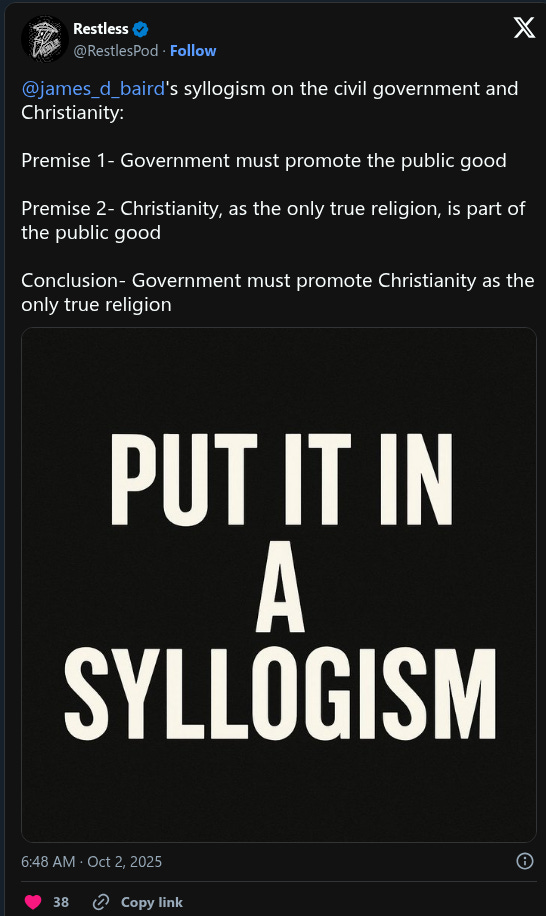
While this seems to be a fairly clear idea derived from texts like Romans 13 and has been maintained consistently in our confessional documents (even under American revisions), the modern two kingdoms paradigm casts doubt upon it.
I first ran into this in a journal article by David VanDrunen (one of the major movers behind modern 2K) some years ago (before I was even his student). He makes similar arguments in Politics After Christendom, his 2020 book.
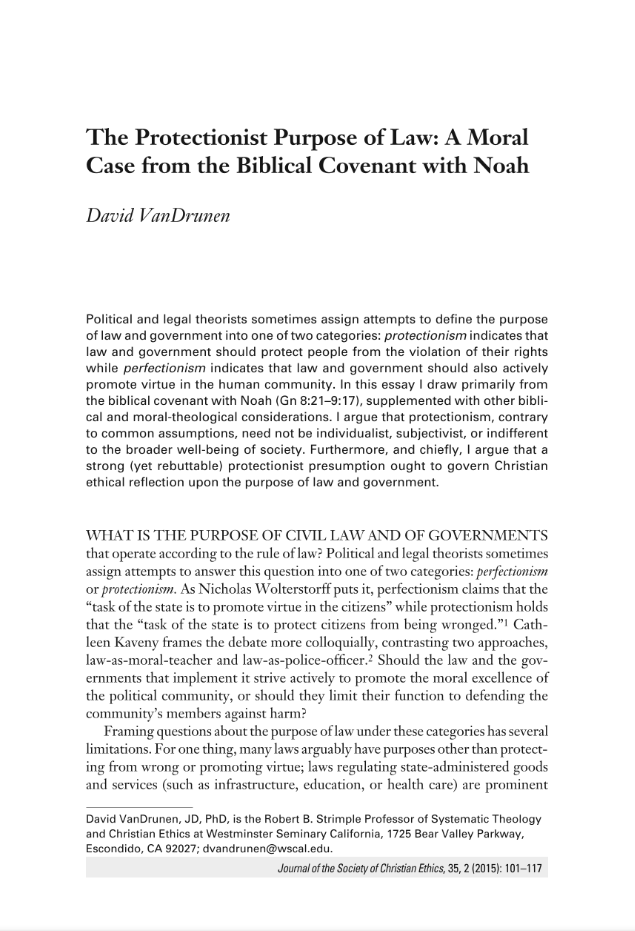
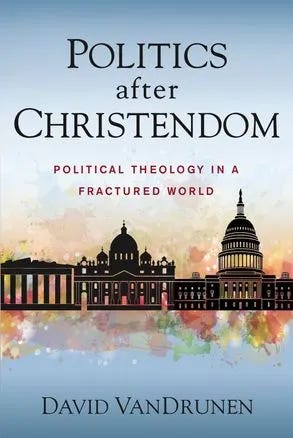
Let me say at the outset, as a former student who knows DVD, I don’t have any personal animus against him, he’s a good man and scholar. But I have come to disagree with his political project quite significantly.
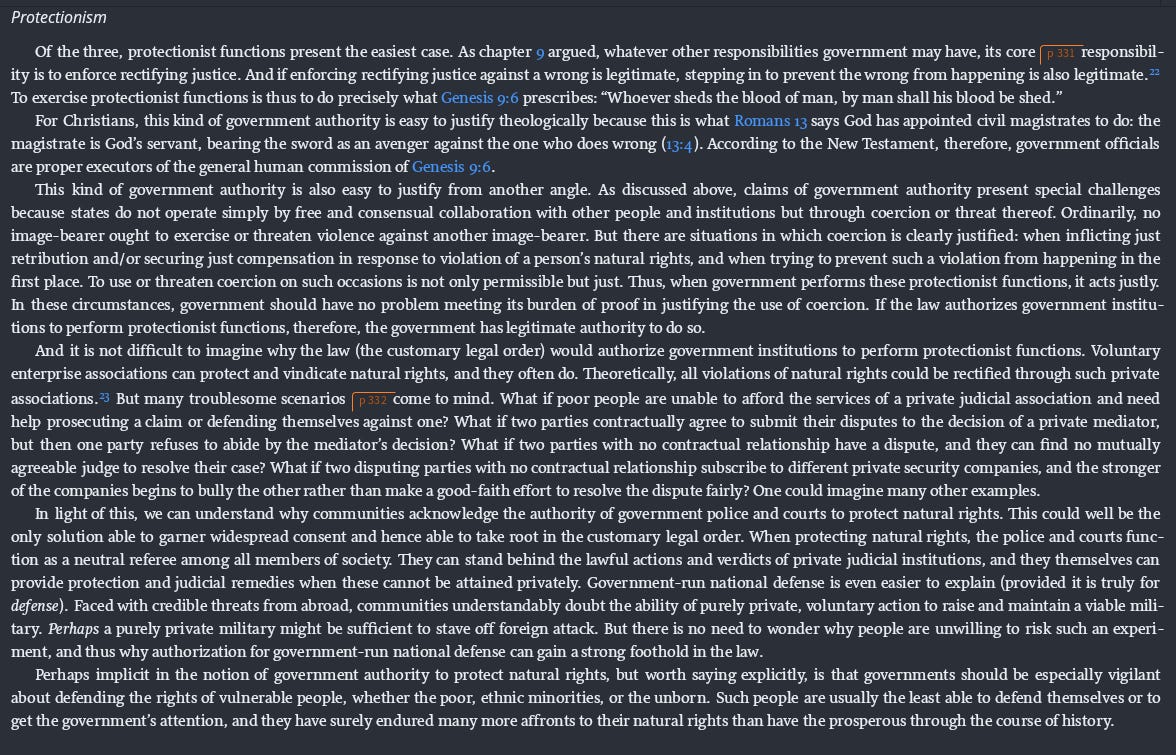
VanDrunen in PAC talks about the functions of government in three categories: protectionist, perfectionist, and providing services. He does acknowledge some limitations to the framework, but it does seem to be highly influential in his thought. (PAC p. 329-330)
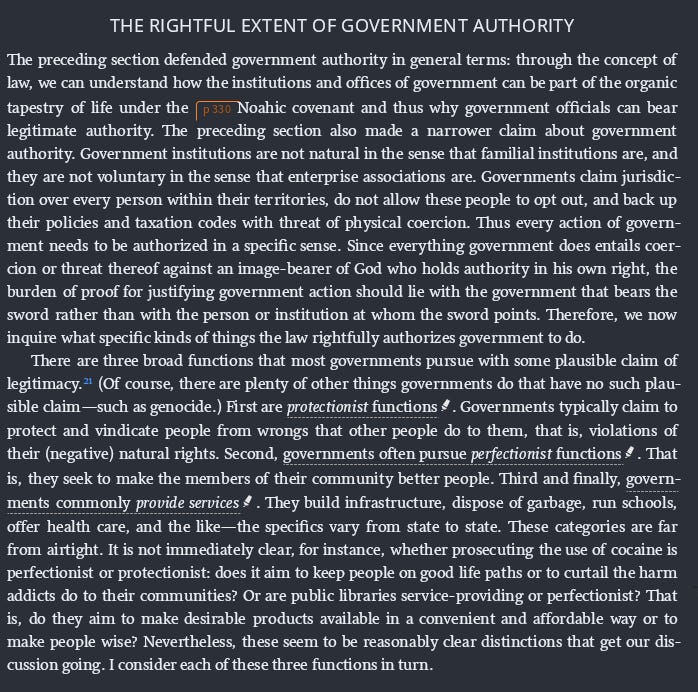
The protectionist functions would seem to most closely align with the negative Romans 13 functions (bearing the sword, suppressing evil). VanDrunen has no qualms with these whatsoever. (PAC 330-332)
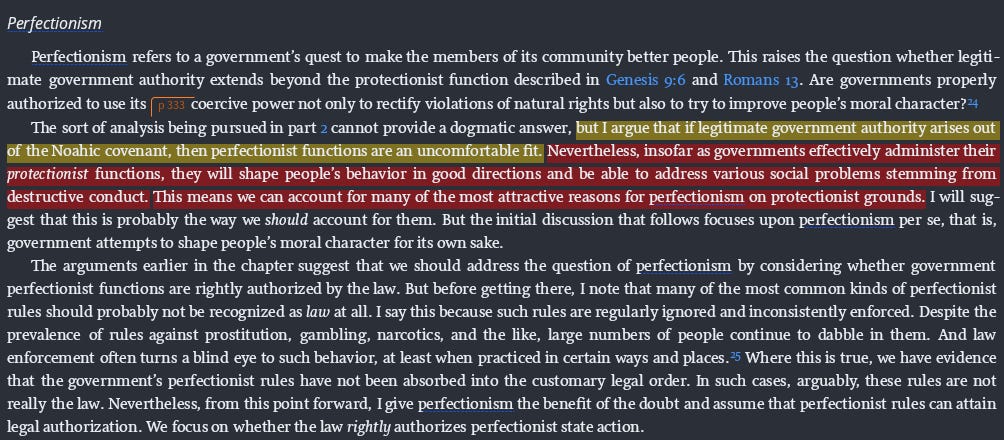
However, he is uncomfortable with perfectionist functions, which (IMO) entail the positive Romans 13 functions of praising the good. He argues that proper protectionism sufficiently shapes behavior in good directions, without the gov’t acting in that direction. (PAC 332-333)
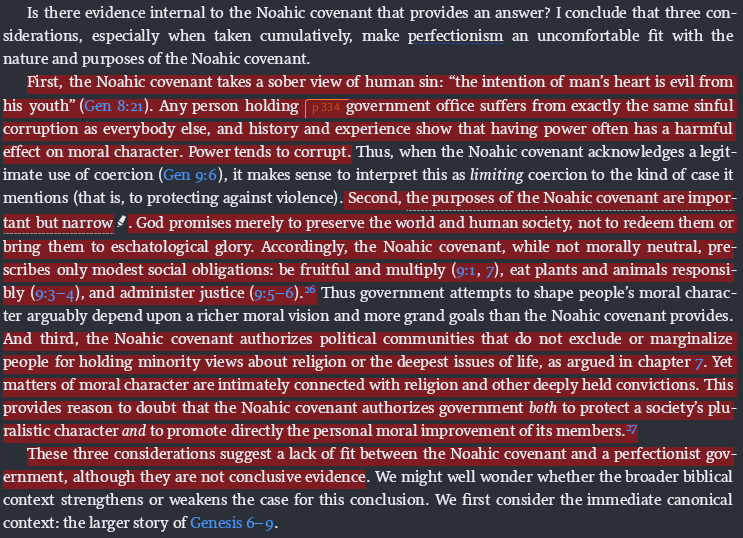
DVD argues as he often does that the Noahic Covenant norms and limits civil governments. He uses this Noahic paradigm to come down largely against perfectionist (morally positive) functions of government. (PAC 333-334)
When DVD later turns to Romans 13, he argues for a very narrow and Roman-contextualized idea of the praising of good that is described there. (PAC 336-337)
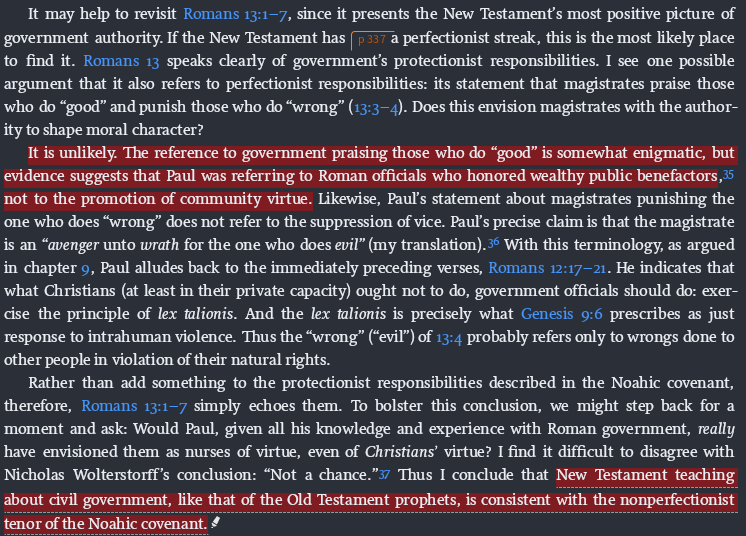
I don’t find this explanation of the positive prescriptions of Romans 13 compelling at all; it seems very novel (only a single journal article from 1988 is cited in defense). Perhaps this shows some of the methodological problems of modern biblical scholarship.
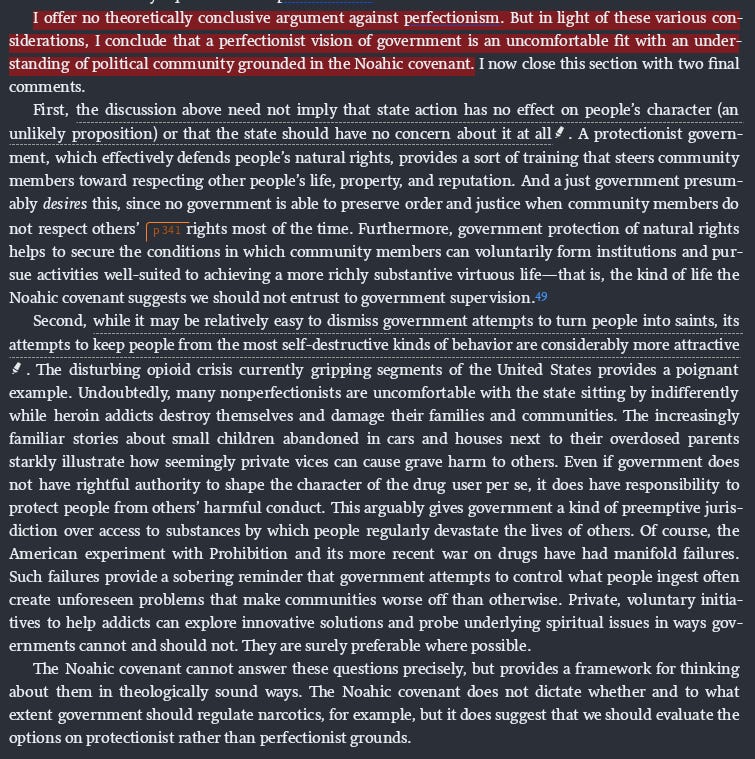
While DVD never conclusively rejects perfectionism, he continues to assert that it is uncomfortable with his Noahic paradigm. He at least provides a basis for the rejection of a morally positive vision of government. (PAC 340-341)
VanDrunen’s ideas in this field are highly influential, having been taught in the classroom to likely hundreds of ministers and academics over the years who are now in our churches, and even beyond that through his published works.
As we come to a point of broader reckoning with political theology (through studies on Christian Nationalism and things of the sort) there needs to be honest and open examination of some of the more modern ideas like VanDrunen’s that have brought us here.